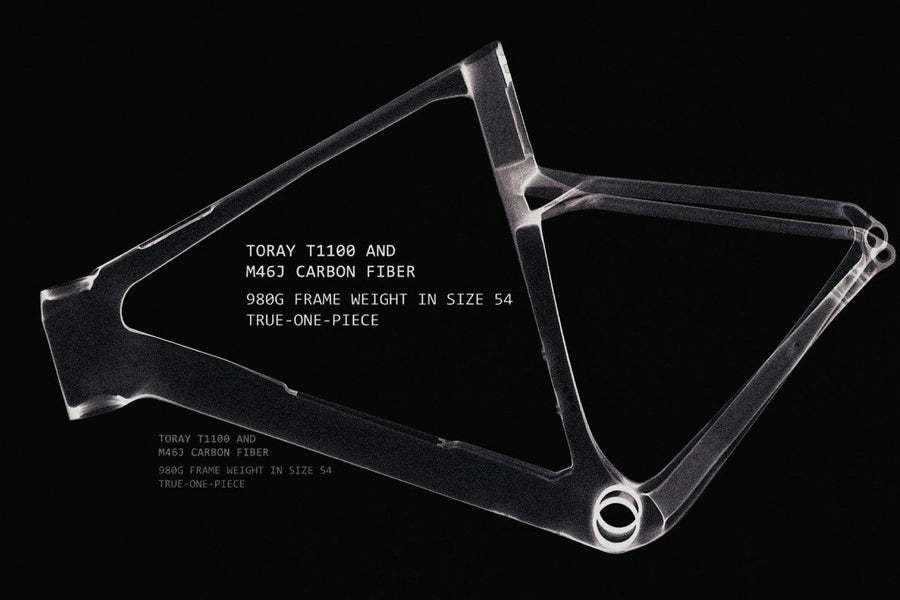
We sacrificed a crashed warranty frame to a bandsaw, and the cross-sections say more about engineering priorities than any whitepaper. The cutaway above is the seat cluster — the orange block is a structural foam core.
Walls that change mid-tube
Down tube walls run thick near the bottom bracket, thin through the middle, and thicken again at the head tube — drawn by load maps, not manufacturing convenience. Cheap frames keep constant walls because variable ones cost layup time.
The foam that stays
That core isn't laziness: in thin-walled junctions a shaped core keeps opposing walls from oil-canning under load, for single-digit grams. The alternative is more carbon, which weighs more and rides harsher.
Weave where it works
Cosmetic weave on the outside is fashion; structural weave lives at clamp zones and bottle bosses where multi-directional loads need it. Inside this frame, unidirectional fiber does the long-distance work — exactly as it should. The frame in the cutaway is the Spear RDC Frameset.
This is a sample article — the content is illustrative, not a first-party test.