Buying a frameset from a chart feels riskier than swinging a leg over one at a shop. It isn't, if you read the right two numbers — and ignore most of the rest.
Stack and reach, nothing else first
Stack is the vertical distance from the bottom bracket to the top of the head tube; reach is the horizontal one. Together they locate the front of the bike relative to your feet, independent of tube angles or wheel size. Seat tube length, top tube length and the size label on the chart are all downstream conventions — two brands' "54" can differ by a centimetre where it counts, while their stack and reach tell the truth.
Measure the bike you already ride
If your current bike fits, its stack and reach are your target — most manufacturers publish them, or a plumb line and a spirit level get you there in ten minutes. Match the new frame to within about 5 mm of reach and 10 mm of stack, and remember the adjustment ranges: spacers buy stack after the fact, stem length buys reach. It is easier to add spacers to a slightly low front end than to fix a frame that is simply too long.
Reading a real chart
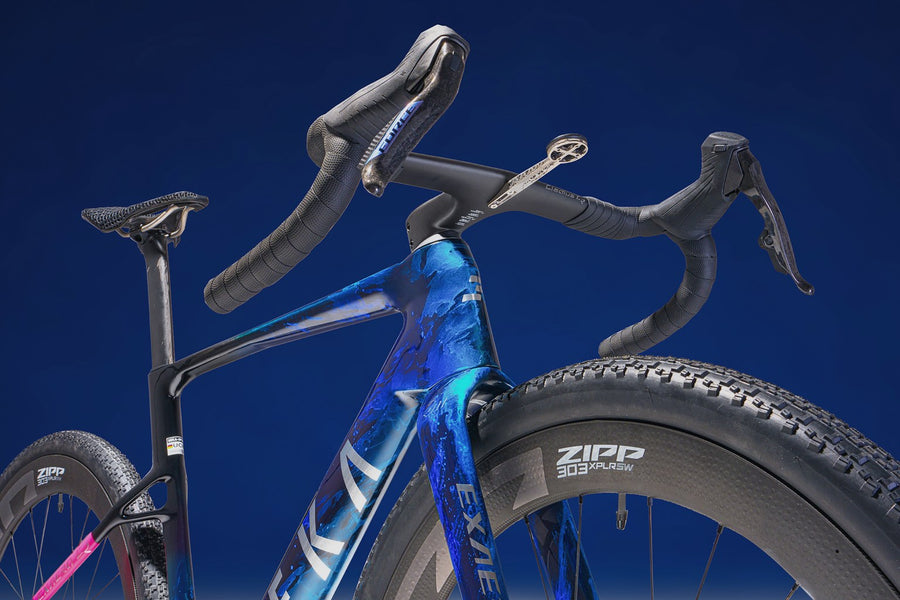
The ExAero GR runs six sizes from 49 to 61 — gravel geometry, where a touch more stack than your road fit is usually right. The Spear adds MR and LR racing sizes between the standard ones: same stack band, longer reach, for riders who want the racier position without sizing up the whole frame. That is exactly the kind of option a chart offers and a showroom rarely stocks.
When between sizes
Size down for a racier position and more standover, up for stability and a taller front end — and let reach cast the deciding vote, because it is the harder one to correct. If the chart leaves you genuinely torn, write to us with your current bike's numbers through the support page before you order; sizing is what we most want to get right the first time.