Some rides you follow for the route; this one you follow for the arc. In February, German outdoor filmmaker Fritz Meinecke flew four and a half hours from home, built his bike out of a battered flight case in a Marrakech riad, and rode out alone — his first multi-day solo tour abroad. Eleven days later he rolled onto the beach in Essaouira with 1,746 kilometers, more than 15,000 meters of climbing, and 87 hours of riding behind him. Four days after that, he was in a German emergency room.
His two-and-a-half-hour film about the trip is the best recent argument for what bikepacking actually is: not a gear list, not a GPX file, but a controlled experiment on your own morale. This long read retells the film's story and pulls out the notes we couldn't stop taking. All events are as recounted in the film; quotes are paraphrased and translated from the German.
The film: Bikepacking Abenteuer Marokko — Der Film (1.700km Fahrrad Tour), by Fritz Meinecke. In German.
The honeymoon: five days of the Morocco you imagine
Day one leaves Marrakech at sunrise and goes straight up: quiet back roads and gravel sectors into the High Atlas, clay villages built into the rock, a 23-kilometer climb in 30-degree February heat, and a snow-fringed pass at 2,260 meters — his biggest climbing day ever, at that point. It ends in the dark with a discovery every carbon-wheel owner dreads: a spoke nipple rattling loose inside the rim. A phone call to his wheel builder, a shrug, and an improvised bed in an auberge's laundry-drying room. The wheel holds for the remaining 1,700 kilometers.
Day two detours through Aït Benhaddou, the fortified ksar you've seen in half of Hollywood, then stumbles into the start of a gravel race at the film studios of Ouarzazate, complete with a chance meeting with ex-WorldTour sprinter Rick Zabel. It becomes a 200-kilometer day ending in canyon serpentines, and one of those bikepacking economics lessons that never gets old: dinner, a bed under thick wool blankets, and breakfast for about 26 euros.
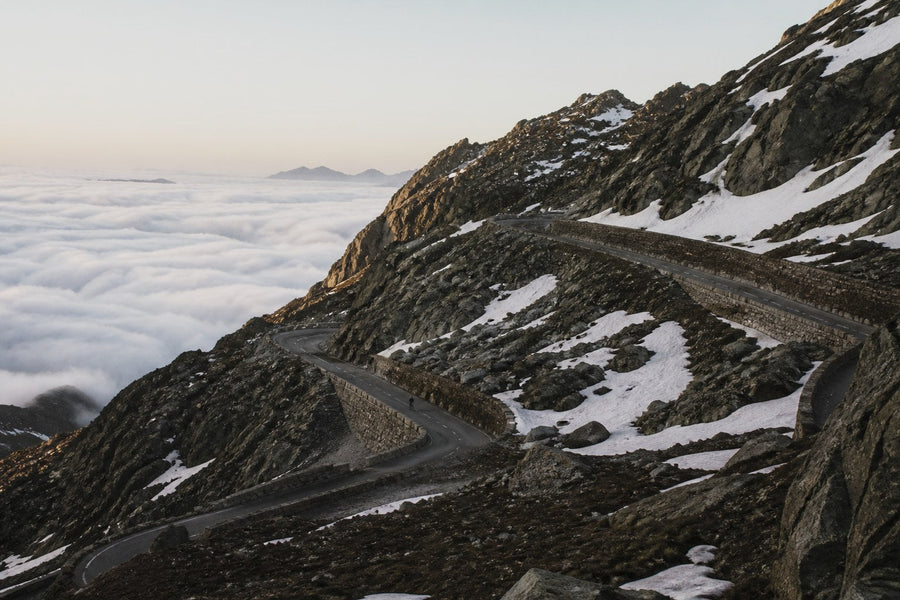
Day three opens with frozen bottles and closes at the route's high point, 2,904 meters by GPS, before a 1,600-meter descent into rock desert at up to 72 km/h — with the thought every home mechanic knows intimately: I built this bike out of a suitcase; did I really torque every bolt? That evening he solves his calorie problem the honest way, buying twelve chocolate bars at a gas station, and cowboy-camps under the open sky on a bivy bag.
Days four and five are the postcard: first dromedaries, a sunset ride along the edge of the dunes, a luxury desert tent camp and a first shower after 800 kilometers — he calls it a small rebirth — then a 'recovery day' of 147 kilometers, a village livestock market, and an argument between the angel on one shoulder saying this is a holiday and the devil on the other pointing at next season's race calendar.
The turn: wind, ice, and dogs
Day six is where the film pivots. Gusts strong enough to knock a loaded bike sideways, a twenty-degree temperature crash, and cold rain force a frustrated early stop in an unheated room, wet kit hanging everywhere, with the tour's most remote 80-kilometer stretch still ahead.
Day seven starts at 2 degrees and delivers the trip's most haunting hour: a canyon leading past an abandoned mining complex near Midelt — ore chutes, cart rails, ruined workers' houses — where a miner with a headlamp appears and invites him deep underground. He follows a short way, then declines; alone, with the bike unattended outside, some invitations stay unanswered. What follows is worse: hours of gusting headwind he describes as someone shaking you while blowing in your ear, snow-rain at 1.8 degrees, and the first wolf-packs of herding dogs — five, six, seven at a time, with a mission that clearly isn't friendly. A driver eventually escorts him over the 2,192-meter pass with hazard lights flashing. With distance, he calls it the worst day he's ever had on a bike: less a physical ordeal than psychological terror.
Day eight is sunny and it doesn't matter. The attacks come every five to ten minutes; at one point he passes a pack stripping a donkey carcass like a nature documentary. Nauseous from constant adrenaline, unable to enjoy a single meter, he makes the decision the film is really about: this is a free-route tour with no organizer and no dot-watchers, and changing the plan is the adventure staying honest. He takes a seven-euro bus to Rabat.
The coast: redemption at 200 kilometers
The Atlantic act begins at a low ebb: a dropped camera, one lens dead, and Ramadan — which for a touring cyclist means shuttered restaurants and, in his case, roughly ten ATMs that refuse to pay out while his cash reserves shrink to three euros. Casablanca, a city of three and a half million, offers exactly one open kitchen: a McDonald's, which after two days of near-fasting becomes a feast worth filming. Then he does the thing that makes the film worth watching twice — with the day already long, he rides an extra loop at sunset purely to make it a round 200 kilometers, because the head needed it more than the legs.
From there the tour exhales: a riad in Safi's medina with mint tea on the roof terrace, then a deceptive final stage to Essaouira — more than 1,000 meters of climbing along a coastline that looks flat on the map, into six and a half hours of headwind — and a finish line made of beach crowds and Atlantic wind.
The sting
The film doesn't end on the beach. The night after finishing, a gastrointestinal infection sets in; four days later, back in Germany, he's in an emergency room, barely responsive — the bill for eleven days of erratic roadside nutrition, cold, and stress arriving all at once. The closing message isn't about distance at all: you only notice health when it's gone, and gratitude for an ordinary good day is the cheapest thing you'll ever carry.
What we're taking from it
Calories are logistics, not willpower. Rural Morocco's default meal is bread and omelette — magnificent, and roughly 600 calories against a 5,000-calorie day. His breakthrough was treating gas stations as aid stations and buying chocolate by the dozen. If your route crosses a calorie desert, plan for it the way you'd plan for water.
The margin came from roofs, not the sleep system. The bivy-only setup worked — including a sub-zero cowboy camp — but recovery came from 26-euro auberges and one gloriously unnecessary desert tent camp. On a hard route, a cheap bed is performance equipment.
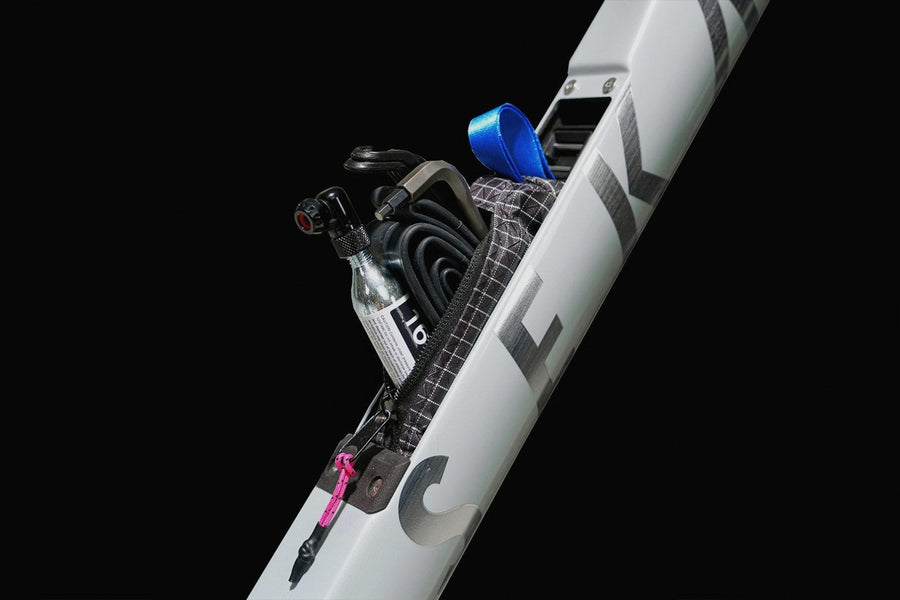
Redundancy where it counts, and research the dogs. A satellite communicator with live tracking, three power banks, two tubes — and the one variable he admits he'd research first next time isn't the elevation profile, it's the regional dog situation. Some hazards don't show up on a heatmap. The bike was an ExAero GR RDC Frameset build.
This is a sample article — the content is illustrative, not a first-party test. Story and events belong to the film's author; this retelling is for layout testing.