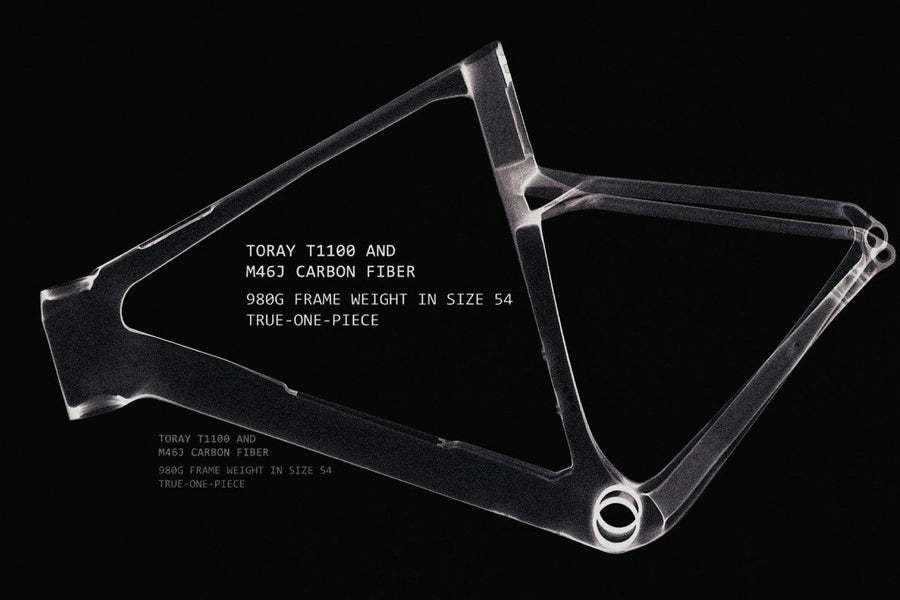
The first time you see the Wind Eye — the sculpted opening where the seat tube meets the top tube — the natural question is whether it's aero or aesthetics. The honest answer: it started as neither.
Born on the compliance rig
SEKA's engineers were chasing vertical compliance without a suspension seatpost. Opening the junction let the seat tube flex as a tuned leaf spring: 17 mm of measured deflection at the saddle under a 100 kg load, with no pivot, elastomer, or service interval.

Then the tunnel had an opinion
In CFD, the opening turned out to bleed the low-pressure wake behind the seat tube. The drag delta is small — low single-digit watts — but it runs the right direction at every yaw angle tested.
Making it survive
An opening in a structural junction is a stress concentrator by definition. The fix is in the layup: continuous pitch-based fibers loop the eye like a grommet, and the structure passed ISO fatigue at loads that broke the test rig's fixture before the frame. Wind Eye ships on the ExAero GR RDC Frameset.
This is a sample article — the content is illustrative, not a first-party test.